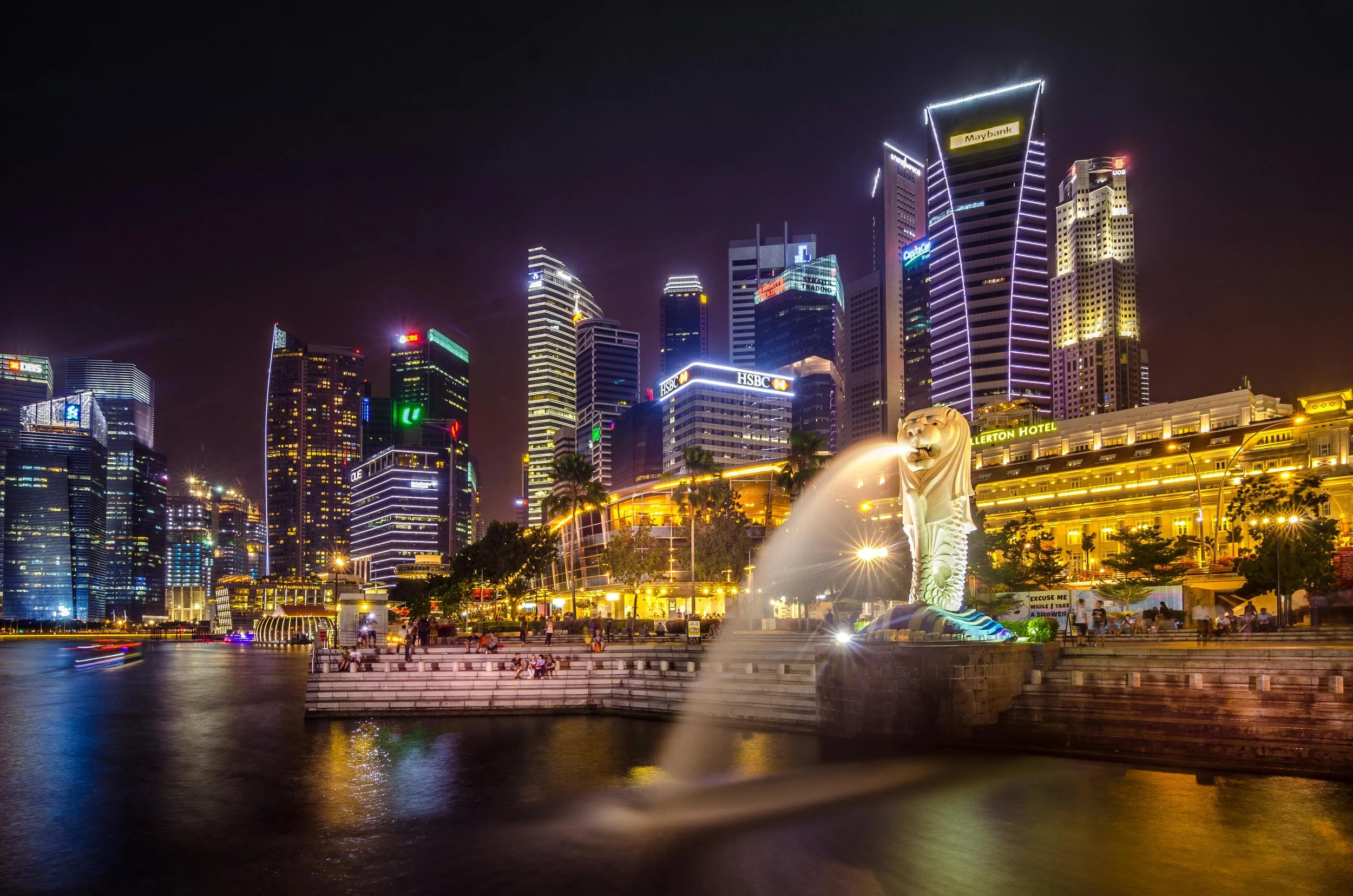

Why Singapore Became the Capital of Quiet Power
Singapore doesn’t advertise ambition. It doesn’t reward spectacle. Yet over the past two decades, it has become one of the most strategically important cities for people operating at the intersection of capital, governance, and long-term influence. Its power is not theatrical. It is structural.

Singapore is a city shaped less by historical drift and more by deliberate design. Policy, infrastructure, education, and planning have been aligned toward competitiveness and continuity—two qualities ambitious people value when building careers, companies, and capital structures meant to last. In practical terms, the city offers something rare: the ability to plan far ahead without constantly renegotiating the rules of the game.
Power Built on Systems
For global investors and internationally mobile founders, quiet power begins with system trust. Singapore is widely chosen as a base for regional headquarters, wealth management, and cross-border operations because the environment is built around clarity and predictability.
What matters is not simply that risk is low, but that it is legible—understandable, measurable, and consistently governed. This predictability becomes a competitive advantage in a world where volatility is often disguised as opportunity.
Governance in Singapore rarely feels like friction. Instead, it functions as infrastructure—setting standards, reducing uncertainty, and enabling continuity. For those scaling businesses or managing complex portfolios, this translates into fewer surprises, cleaner execution, and faster decisions without the instability that speed can bring elsewhere.
Talent, Geography, and Strategic Access
Singapore’s talent culture reflects the same discipline. English operates as a practical business language, and the city attracts highly skilled professionals across finance, technology, engineering, logistics, and life sciences. Ambition is typically expressed through competence and delivery rather than personal visibility.
Geography reinforces this advantage. Singapore offers proximity to fast-growing Southeast Asian markets while remaining deeply integrated into global capital and trade networks. It functions less like a cultural “scene” and more like an operating platform—efficient, neutral, and internationally fluent.
For ambitious individuals, this combination of talent density and strategic access is difficult to replicate elsewhere.

Lifestyle, Wealth, and the Appeal of Restraint
Quality of life in Singapore is built around reliability. Safety, cleanliness, functional public services, and strong infrastructure reduce daily friction. Wellness is integrated quietly through order and access rather than performance, supporting focus and consistency over time.
Wealth in Singapore tends to be discreet. Luxury exists, but it rarely demands attention. Status is more often expressed through privacy, access, and control of time than display. In this context, restraint is not modesty—it is confidence.
As global markets become louder and more volatile, Singapore’s model has gained relevance. It does not promise reinvention through disruption. It offers continuity through competence.
For those building institutions, capital, or influence meant to endure, quiet power is not a limitation. It is an advantage.